




Travel inspiration is very easy to collect and strangely hard to use. You save a hotel in Lisbon, a ramen spot in Tokyo, a "hidden beach" outside Tulum, a neighborhood guide to Paris, and a packing tip from someone who owns fourteen packing cubes. Then the trip gets real, and the saves are scattered across apps that were built for watching, not planning.
The fix is not to become a full-time itinerary manager. It is to move travel saves into a system that can answer the questions you actually ask before and during a trip:
- What did I save for this city?
- Which places are near each other?
- What do I need to book?
- What did the creator say was worth ordering, doing, or avoiding?
- What should I remember when I am already there?
Step 1: Separate inspiration from decisions
Not every travel save deserves a place in the final plan. Treat everything as inspiration first.
Save loosely. Do not stop mid-scroll to build an itinerary. The goal at capture time is to keep the source and enough context that you can evaluate it later.
When planning starts, sort saves into three buckets:
- Maybe: interesting, but not enough detail yet.
- Plan around: hotels, restaurants, hikes, museums, events, or neighborhoods you genuinely want.
- Reference: packing tips, transit advice, language notes, booking warnings, and general guides.
Most people skip this step and try to make the social save itself become the plan. That is how you end up with 57 videos and no dinner reservation.
Step 2: Put real places on a map
Travel planning gets clearer when place saves stop being thumbnails and become pins. Restaurants, hotels, bars, beaches, trailheads, museums, and shops should live on a map.
That map does two useful things:
- It shows clusters, so you can plan by neighborhood instead of crossing a city five times.
- It helps in the moment, when you are tired and want to know what you saved nearby.
Stasht's save travel ideas page covers this exact workflow. When a save has a place signal, Stasht can keep it with your map instead of leaving it stuck inside Instagram or TikTok. For food-heavy trips, the broader save places from TikTok guide is a better starting point.
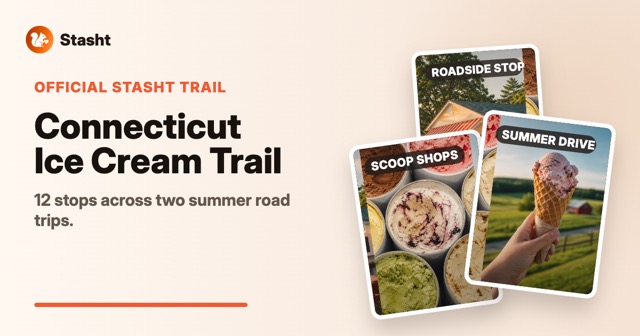
For a concrete map-first example, the official Stasht Connecticut ice cream trail organizes 12 shops into two drives so you can pick two or three without crisscrossing the state.
Step 3: Keep the original context
A map pin is useful, but it is not the whole save. The video might explain what to order, when to go, what line to avoid, or why the place is only worth it at sunset.
Keep the source link attached to the place. That matters for:
- exact dish recommendations
- booking links
- creator comments and updates
- visual context
- whether the tip still feels credible later
This is where plain Google Maps lists can fall short. They are excellent maps, but they do not naturally preserve the social post that made you care about the place in the first place.
Step 4: Add notes only when memory will fail
You do not need to annotate every travel save. That creates homework, and homework loses.
Add a note only when the reason matters:
- "go at opening"
- "book two weeks out"
- "near the hotel"
- "order the scallion pancakes"
- "good rainy day option"
- "Maya sent this"
Short notes are better than perfect notes. The goal is to make future-you understand why past-you saved it.
Step 5: Use reminders for time-sensitive saves
Some travel saves have a deadline: ticket drops, reservation windows, seasonal pop-ups, museum closures, festivals, train releases, visa reminders, or a restaurant that only opens bookings on a specific day.
Those should not live only in a collection. They need a reminder or calendar moment. This is one of the reasons Stasht handles travel saves alongside event saves, because trip planning often mixes places and dates.
Demarest Farms books 1.5-hour slots online only, so keep the booking reminder with your plan for apple picking near NYC.
A simple workflow that holds up
Here is the lightweight version:
- Save every travel idea to one place as soon as you find it.
- Let place saves become map pins.
- Keep the original video or article attached.
- Add notes only for details you will not remember.
- Before the trip, search by city and sort into maybe, plan around, and reference.
- During the trip, open the map instead of scrolling social feeds.
That is enough. You do not need a masterpiece itinerary for every weekend. You need the ideas you saved to be usable when you finally need them.
Common questions
Can I save travel ideas from both Instagram and TikTok? Yes. Stasht works with Instagram, TikTok, YouTube, Pinterest, screenshots, and normal web links, so travel inspiration can live together.
Does every travel save need to be a map pin? No. A restaurant or hotel belongs on a map. A packing tip or itinerary video should stay searchable as a card with notes and the original source.
Is this better than Google Maps lists? Google Maps lists are strong for places you already know. Stasht is useful earlier, when the place is inside a Reel, TikTok, caption, screenshot, or spoken recommendation and you want to preserve the source context.
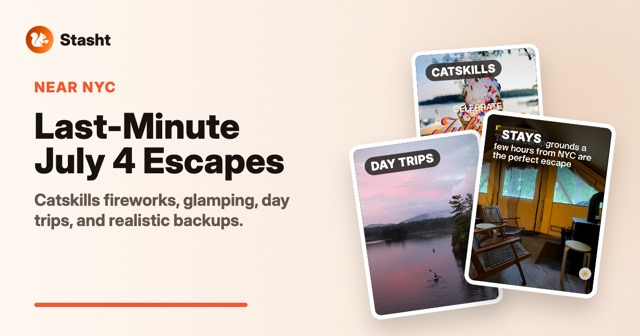
What should I read next? For a route where the driving conditions matter as much as the stops, read the Million Dollar Highway road trip guide. For another concrete trip example, read how Amanda turned Alaska Instagram saves into a 5-day trip plan. If the trip is closer to home and almost out of runway, read the last-minute 4th of July weekend escapes near NYC guide. If you are planning laptop time in New York, read our NYC guide to remote-work cafes, hotel lobbies, and public work spots. If most of your trip saves are restaurants and bars, read the best apps to save places from TikTok and Instagram. If the bigger issue is all social saves, read the best ways to save and organize social media posts.